

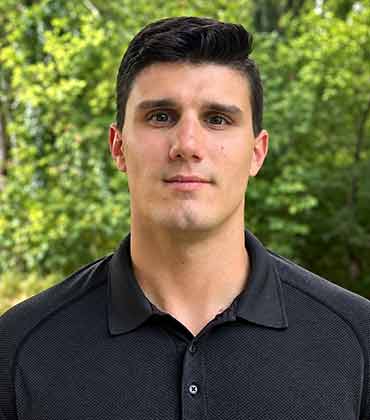
 Ashton Tate, Founder
My passion for health education really began with my own personal experience. When I was younger, I struggled with my weight, and eventually I went through the process of losing weight and learning how to live a healthier lifestyle.
That experience made me realize how much easier it would have been if I had developed those foundations earlier in life. Instead of waiting until unhealthy habits have already been established, what if we could help students understand their health and begin building healthy habits while they are still young?
That idea has shaped everything we have built through Glory to Glory Fitness and The F.O.R.M. Curriculum. Our goal is not simply to give students more health information. We want to help them build a foundation they can actually use and carry with them for the rest of their lives.
Shifting the Focus from Facts to Action
I think one of the biggest problems in health education is that we often focus on the quantity of information rather than the quality of the information and, most importantly, the application of it.
Students can learn a tremendous number of facts about nutrition, exercise, sleep or other areas of health and still never apply those concepts to their everyday lives. Knowing something and living it are two very different things.
I believe effective health education has to simplify the information, focus on what is truly foundational and continually help students connect what they are learning to what they are actually doing. The goal should not simply be, “How much information did we teach?” It should also be, “What can this student now do differently because of what they learned?”
Giving Every Student a Clear Path to Healthier Habits
We intentionally try to keep health education foundational. Regardless of a student’s background, athletic ability or current health habits, there are core areas of health that every student needs to understand and practice. That is why our curriculum is built around four foundational pillars rather than overwhelming students with disconnected information.
At the same time, the application does not have to look exactly the same for every student.
One of the ways we accomplish that is through our habit-tracking tools. Students can establish a baseline of what they are currently doing and then track habits that are specific to the areas where they need to grow. One student may need to focus on movement while another may need to focus on sleep, hydration or another healthy behavior.
That gives us a consistent framework and measurable outcomes while still allowing the student's individual application and growth to be personalized. We want the foundation to remain consistent while allowing the next step to be specific to the student.
-
The goal should not simply be, ‘How much information did we teach?’ It should also be, ‘What can this student now do differently because of what they learned?
Developing the Character to Follow Through
We believe students need opportunities to practice ownership, not just hear about it.
The habit tracker is a major part of that because it allows students to see their own behavior over time and begin taking responsibility for the habits they are building. We can also track student fitness benchmarks so students and teachers can see progress in a tangible way rather than health feeling like an abstract concept.
Another important component is how students think. Throughout our materials, we incorporate character-focused blocks that go beyond simply teaching academic content. We want students thinking about things like discipline, consistency, responsibility and how the decisions they make today affect where they will be in the future.
If we only teach students what is healthy without helping them develop the mindset and character to follow through on it, we have only done part of the job.
Using Data to Support Individual Student Growth
One of the most encouraging things we see is students increasing the number of healthy activities they are actually participating in as they use the habit tracker.
The important part is that the tracker gives both the student and the teacher something concrete to work from. Instead of simply telling a student to “be healthier,” the teacher can see a student's starting point, identify areas where they may need additional support and help them choose realistic habits to work on.
As those behaviors are tracked over time, students can see their own progress. That creates a very different conversation around health because it becomes less about comparison with everyone else and more about growth from their own baseline.
It also gives teachers real information they can use to customize how they support individual students rather than having to guess what each student needs.
Personalizing the Path from Learning to Application
I believe technology has a tremendous opportunity to make health education simpler rather than more complicated.
Students today already have more information available to them than they could ever consume. I don't think the solution is to keep giving them more. The opportunity is to use technology to help students identify what matters, understand it clearly and then apply it to their actual lives.
Technology can help us personalize the experience, track progress, identify patterns and give students a clear next step without overwhelming them with unnecessary information.
I think the future of health education will be less about simply delivering content and more about connecting education with application. When used correctly, technology can help us make that process more individualized, measurable and practical while actually making the experience simpler for both students and educators.
Thank you again for the opportunity to contribute. We are grateful to be part of the conversation around improving health education and helping students build healthy foundations that can serve them well beyond the classroom.